
Cynthia Richie Terrell
-
Total Recruits50No recruits counted.
-
Cynthia Richie Terrell published The Women’s Power Collaborative: Building a Stronger Democracy for Women | RepresentWomen in Blog and OpEd Library 2025-08-29 23:25:02 -0400
The Women’s Power Collaborative: Building a Stronger Democracy for Women | RepresentWomen
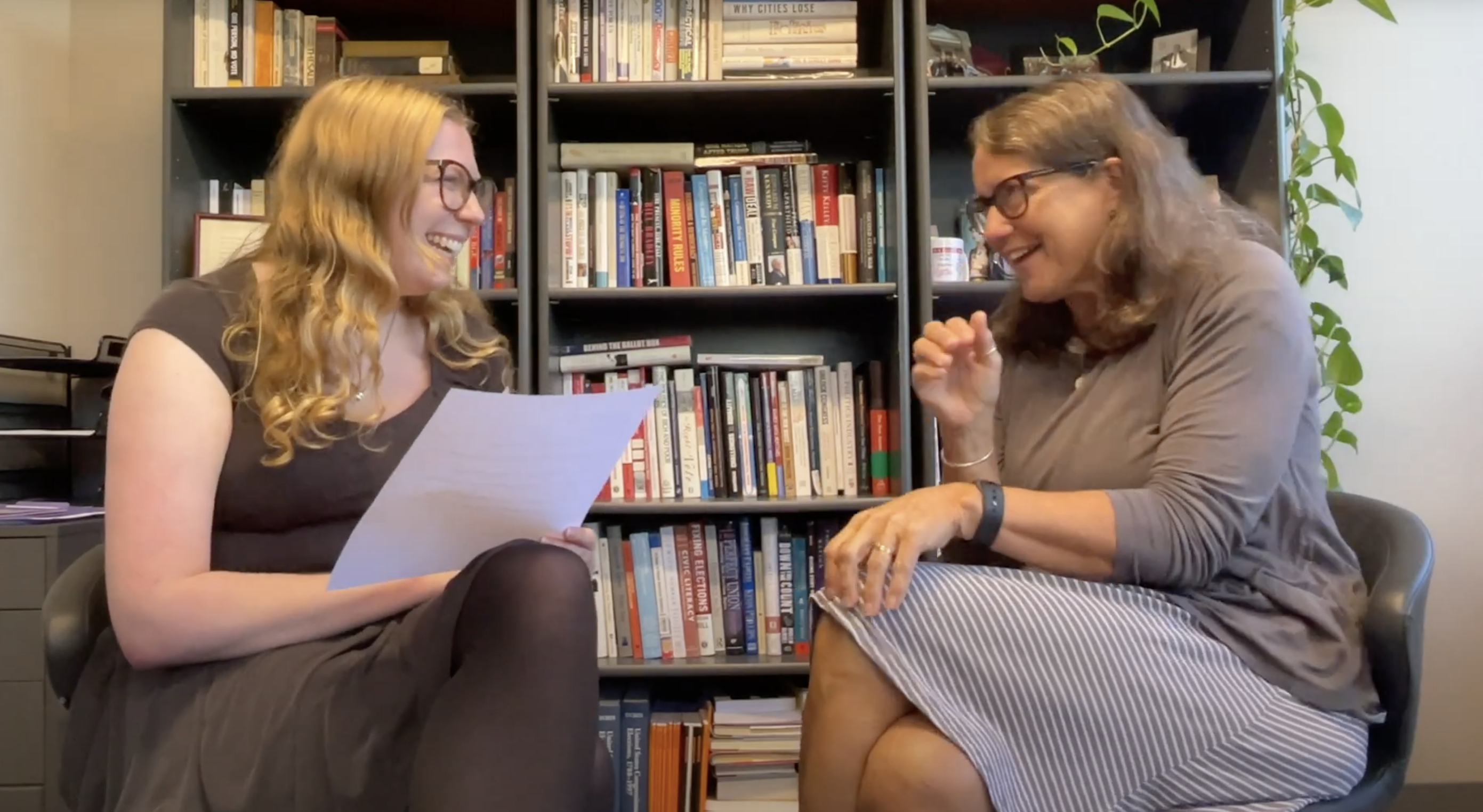
RepresentWomen’s Cynthia Richie Terrell introduces the Women’s Power Collaborative, a new platform connecting advocates and organizations to advance women’s representation and strengthen democracy.
Read more -
Cynthia Richie Terrell published FairVote Honors Rob Richie & Cynthia Richie Terrell with Generational Impact Award in Blog and OpEd Library 2025-08-29 23:01:34 -0400
FairVote Honors Rob Richie & Cynthia Richie Terrell with Generational Impact Award

FairVote honors Rob Richie and Cynthia Richie Terrell with the Generational Impact Award for their pioneering work advancing ranked choice voting and democracy reform across the United States.
Read more -
Cynthia Richie Terrell published Bridging Divides in a Polarized World: Can Dialogue Change Geopolitics? | Athens Democracy Forum in Blog and OpEd Library 2025-08-29 22:52:11 -0400
Bridging Divides in a Polarized World: Can Dialogue Change Geopolitics? | Athens Democracy Forum
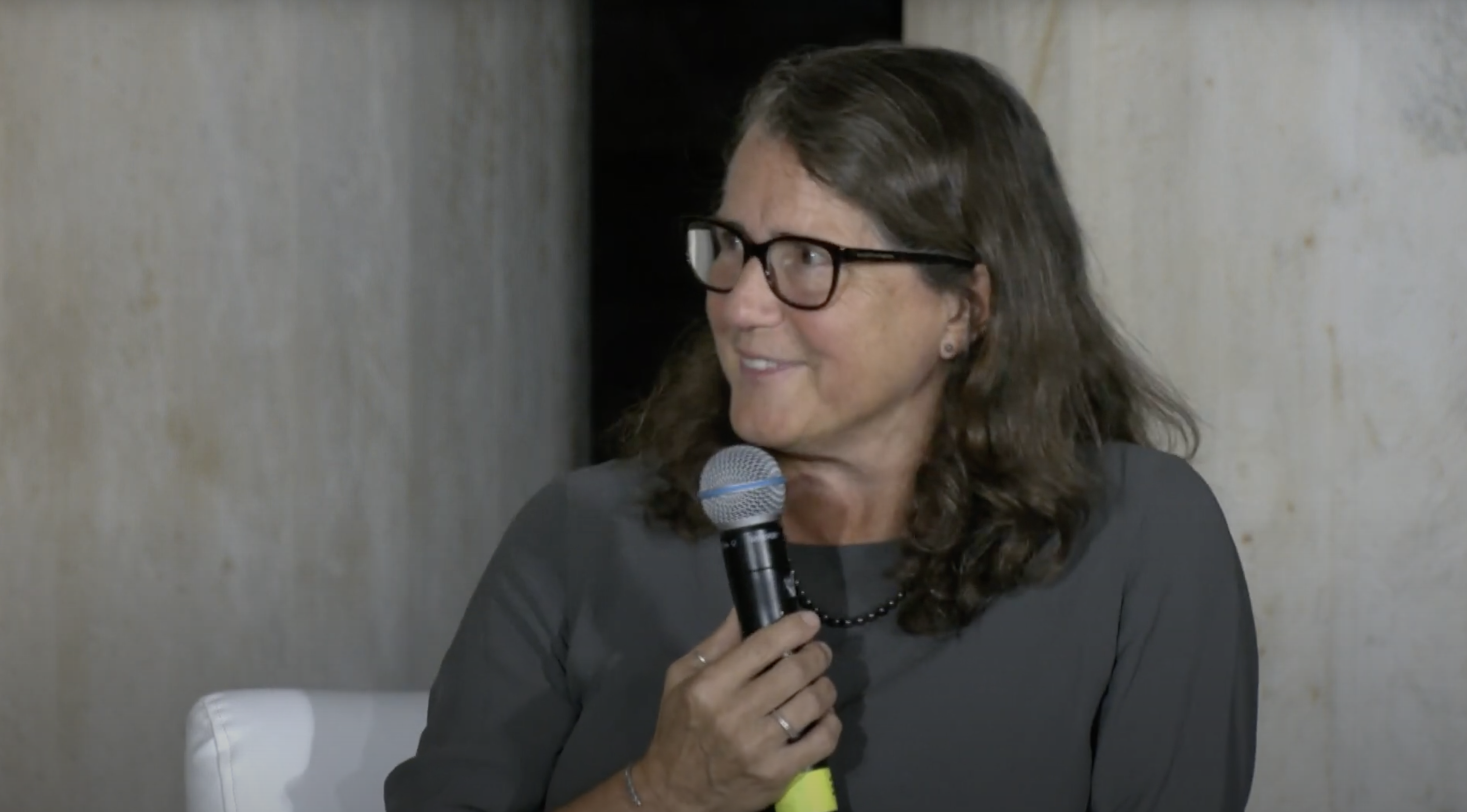
At the Athens Democracy Forum, Roger Cohen moderates a debate with Amos Gitai, Balázs Orbán, and RepresentWomen’s Cynthia Richie Terrell on lessons from past truces, new dialogue experiments, and whether bridging divides can truly influence geopolitics.
Read more -
Cynthia Richie Terrell published Strengthening Democracy Through Women’s Leadership | Athens Democracy Forum in Blog and OpEd Library 2025-08-29 22:31:49 -0400
Strengthening Democracy Through Women’s Leadership | Athens Democracy Forum

At the Athens Democracy Forum, RepresentWomen’s Cynthia Richie Terrell moderates a global panel on how electing more women — and adopting systemic reforms — strengthens democracy.
Read more -
Cynthia Richie Terrell published The Cure for Democracy’s Ills: Cynthia Richie Terrell on Women, Reform, and Representation | The Female Body Politic in Blog and OpEd Library 2025-08-29 22:22:09 -0400
The Cure for Democracy’s Ills: Cynthia Richie Terrell on Women, Reform, and Representation | The Female Body Politic

Democracy is sick — but is there a cure? RepresentWomen’s Cynthia Richie Terrell joins The Female Body Politic to diagnose America’s democratic fractures and prescribe powerful reforms, from electing more women to systemic change.
Read more -
Cynthia Richie Terrell published From Filibuster to Representation: Is the U.S. Senate Broken? | On the Issues Podcast in Blog and OpEd Library 2025-08-29 22:15:12 -0400
From Filibuster to Representation: Is the U.S. Senate Broken? | On the Issues Podcast
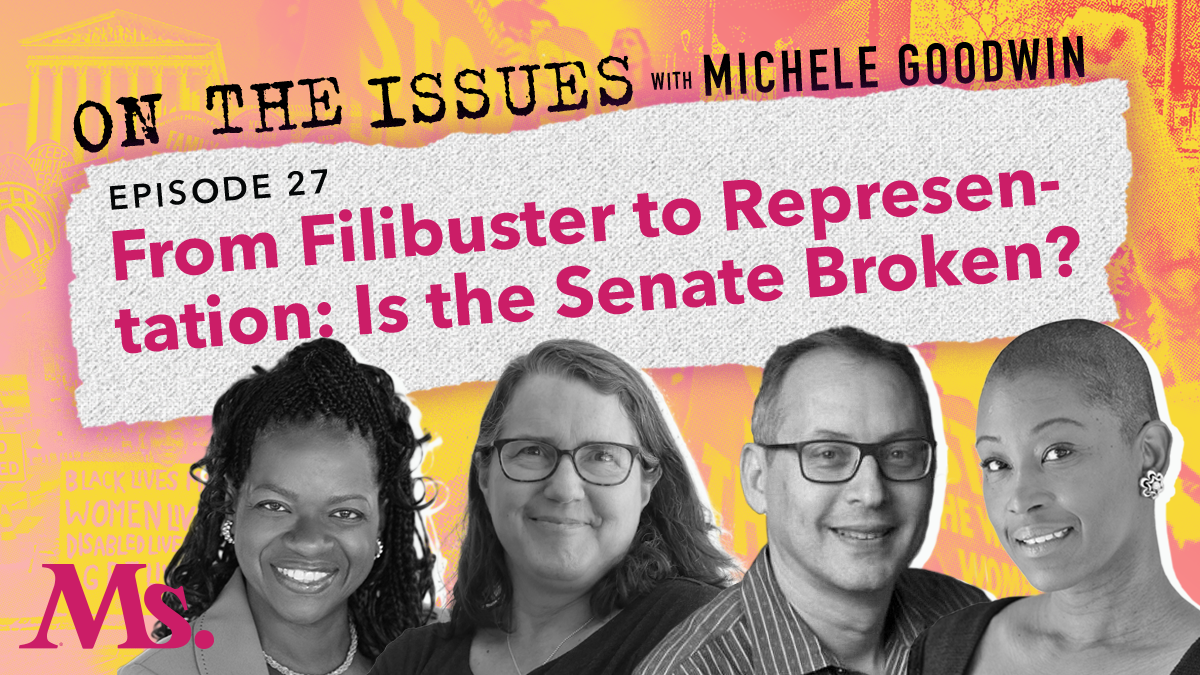
Election law scholar Rick Hasen, civil rights advocate Barbara Arnwine, and RepresentWomen’s Cynthia Richie Terrell join Michele Goodwin to debate the filibuster, voter suppression, and whether the Senate is standing in the way of fair representation.
Read more -
Cynthia Richie Terrell published Weekend Reading on Women’s Representation Week of August 22, 2025 in Blog and OpEd Library 2025-08-22 14:45:05 -0400
Weekend Reading on Women’s Representation Week of August 22, 2025
Discover the story of Febb Burn’s decisive letter, the ratification of the 19th Amendment, and what the 2025 Gender Parity Index reveals about women’s power today.
Read more -
Cynthia Richie Terrell published Weekend Reading on Women’s Representation Week of August 15, 2025 in Blog and OpEd Library 2025-08-15 14:54:37 -0400
Weekend Reading on Women’s Representation Week of August 15, 2025
From Frances Perkins’ pivotal role in shaping the Social Security Act to new milestones for women leaders across the U.S. and abroad, this week’s stories spotlight how women’s leadership drives lasting change — and why systems reform remains key to achieving gender parity.
Read more -
Cynthia Richie Terrell published Weekend Reading on Women’s Representation Week of August 8, 2025 in Blog and OpEd Library 2025-08-08 14:08:37 -0400
Weekend Reading on Women’s Representation Week of August 8, 2025
Sixty years after the Voting Rights Act, I’m reflecting on what it teaches us about progress and possibility.
Read more -
Cynthia Richie Terrell published Weekend Reading on Women's Representation April 25th 2025 in Blog and OpEd Library 2025-04-25 15:03:22 -0400
Weekend Reading on Women's Representation April 25th 2025

Dear Readers.
Earth Day was on Tuesday, April 22! The official theme of Earth Day 2025 is “Our Power, Our Planet,” calling for individuals to advocate for climate solutions and renewable energy at every level of government. 2025 is the 55th anniversary of Earth Day; what has become an international commemoration in 192 countries began as a grassroots movement to call attention to the dangers of climate change and the crucial need to protect our planet. Governments and large corporations across the globe are rolling back key environmental protections, policies, and legislation, leaving it up to individuals and local communities to create positive change.
Now more than ever, women view climate change as the top political issue individuals face. This tracks with research from UN Women, which finds that the effects of climate change are disproportionately impacting women and girls. Furthermore, gender-based violence increases in communities that have experienced a recent climate disaster: Every 1°C rise in global temperature is associated with a 4.7 per cent increase in intimate partner violence (IPV), the study cites.

Greta Thunberg, painted by Melanie Humble
As the time allotted on the global climate clock tracks downward, we in the United States and across the world must change our voting habits to elect more women and enact stronger policies to protect our natural world. The Gender Parity Lifeline highlights the intrinsic link between achieving gender parity and making a transformative investment to slow climate change. Until parity is achieved, women activists across the globe are taking action to transform local food systems, hold legislators accountable, invest in renewable energy, start green businesses, and so much more to protect our planet.

Rachel Carson, author of Silent Spring, painted by Melanie Humble
Other milestones for women this week include: Nebraska ratifying a bill granting women’s suffrage in municipal elections in 1917, Barbara Walters becoming the first woman nightly news anchor in 1976, and Chloe Zhao becoming the first woman of color and the first woman of Asian descent to earn best director at the Academy Awards (2021). Birthdays to celebrate include: Sarah Bryner, Director at Public Agenda, Maria Perez, co-director of Democracy Rising, songwriter and activist Ella Fitzgerald, Patti Russo, ED of the Women's Campaign School at Yale, Julia Ruutila, union organizer, activist, & journalist (1907), civil rights leader Coretta Scott King, and Mary Wollstonecraft, author of A Vindication of the Rights of Women (1759).

Coretta Scott King, painted by Melanie Humble
Read more -
Cynthia Richie Terrell published Weekend Reading on Women's Representation April 18th, 2025 in Blog and OpEd Library 2025-04-18 15:08:40 -0400
Weekend Reading on Women's Representation April 18th, 2025

Dear Readers,
On April 19, 1977, fifteen bipartisan women U.S. Representatives met for the first time to discuss political issues specifically facing women in the United States. Their initial legislative goal was to address disparities in Social Security, improve funds for childcare, and provide essential job training to women receiving federal aid. They also met with former Commerce Secretary Juanita Kreps to increase the number of women receiving federal contracts.
Following the Year of the Woman in 1993, the size of the caucus increased to 24 women. Some of the key legislative milestones achieved by the Congressional Women’s Caucus include:
- The Civil Rights Restoration Act (1987)
- The Women’s Business Ownership Act (1988)
- The Family and Medical Leave Act (1993)
- The Violence Against Women Act (1994)
Bipartisanship is a key tenet of the Congressional Women’s Caucus, encouraging women legislators from across the aisle to build relationships and find common ground on policies that impact all women. This year’s chairs are Rep. Monica De La Cruz (R-TX) and Rep. Emilia Sykes (D-OH).

Lani Guinier, painted by Melanie HumbleBirthdays for notable women this week include: Akshi Chawla, editor of #WomenLead; NYC council member Crystal Hudson, Anne Sullivan teacher & companion to Helen Keller (1866); Laurie Muchnick, fiction editor at Kirkus Reviews, LatinasRepresent CEO Stephanie Lopez, U.S. Rep Gwen Moore, Katherine Maher – CEO of NPR & former CEO of Wikipedia Foundation, and legendary voting rights attorney Lani Guiner, author of Tyranny of the Majority.
Here is a quote from the University of Chicago Legal Forum on democracy from Lani who considered herself a ‘democratic idealist’:
“I want to suggest the extraordinary notion that democracy means that ordinary people should participate in making the decisions that affect their lives. I want to talk about how we can make democracy more participatory and less alienating. I want to describe a vision of democracy as engaged public communication, democracy that is less about winning a "game" and more about listening, responding, and working through the creative tension of difference. This is democracy in which we strive for a synthesis of component voices rather than the monolithic command of a single or homogeneous majority. This is democracy as participatory public conversation.”
Read more -
Cynthia Richie Terrell published Weekend Reading on Women's Representation March 28th, 2025 in Blog and OpEd Library 2025-03-28 15:00:45 -0400
Weekend Reading on Women's Representation March 28th, 2025

Dear Readers,
The final week of Women’s History Month seems like a good time to remember several notable women whose contributions have paved the way for our generation’s work to advance women’s representation and leadership, including the birthdays of civil rights leaders Dr Dorothy Height, Gloria Steinem, the first woman to serve on the U.S. Supreme Court Sandra Day O’Connor, the first woman to serve as Speaker of the House Nancy Pelosi, RepresentWomen’s Arianna Conte, and members of Congress Catherine Cortez Masto & Jasmine Crockett, and the deaths of former Congresswomen Nita Lowey and Mia Love.

Dr. Dorothy Height, painted by Melanie Humble

Sandra Day O’Connor, painted by Melanie Humble
Remembering the Legacy of Congresswoman Nita Lowey 1937 - 2025

The late Congresswoman Nita Lowey along with Congresswomen Pat Schroeder, Eleanor Holmes Norton, Louise Slaughter, Jolene Unsoeld, Barbara Boxer, and Patsy Mink on the steps of the U.S. Capitol in 1991 on their way to speak with Senate Democrats about their support of Anita Hill during the confirmation hearings of U.S. Supreme Court nominee Clarence Thomas.
Remembering Former Utah Representative Mia Love 1975-2025

Former Utah Representative Mia Love, the first Black, Republican, woman to serve in Congress, died earlier this week, painting by Melanie Humble
This year's theme of Women’s History Month is Moving Forward Together! Women Educating & Inspiring Generations. This month, RepresentWomen hosted our fourth annual Democracy Solutions Summit and released a brief exploring gender parity and women’s representation in the United States, Mexico, and Canada. Comparisons between and among nations are a rich source of information about the impact that systems strategies, like electoral reforms, can have on outcomes for women’s representation and leadership. Women must both have access to data-driven solutions that can increase women’s representation and participate in dedicated and intentional spaces to turn those solutions into action.
This week’s Weekend Reading covers potential women candidates for the presidency in 2028, women candidates for governor Maine and Alaska, the fight for voting rights across the nation, tariffs and the pink tax.
Read more -
Cynthia Richie Terrell published Weekend Reading on Women's Representation February 28th, 2025 in Blog and OpEd Library 2025-03-07 13:57:52 -0500
Weekend Reading on Women's Representation February 28th, 2025

Dear Readers,
This week, the RepresentWomen team released a brief on electoral systems and outcomes for women in Mexico, the United States, and Canada. The brief finds that the use of antiquated voting systems in Canada and the United States is a major barrier to women winning office, while the proportional voting system paired with well-enforced gender quotas in Mexico has had a huge impact on outcomes for women, who now hold 50% of seats in the Mexican Congress.

I wrote more about the electoral barriers women face in the United States in the introductory letter for the report: “The decline of women in the U.S. House of Representatives in the 2024 elections indicates that current strategies alone are insufficient for building women’s political power and reaching gender balance in Congress and our highest executive offices. The fact that Mexico has reached gender balance after adopting gender quotas and a fairer voting system offers advocates for women’s representation in the United States a blueprint for parity that includes the adoption of electoral systems that create competition and open seats that enable more women to run and to win. Fairer voting systems that work in the American, candidate-based context include ranked choice voting (RCV) for single-winner seats and RCV in multi-winner districts – these reforms are the most promising and scalable strategy to reach gender balance in government in our lifetimes.”

RepresentWomen’s 4th Annual Democracy Solutions Summit

We are also gearing up for our 4th annual Democracy Solutions Summit, uplifting women experts to kick off Women’s History Month – use this link to register! Speakers this year include opening remarks for the Summit from Erin Vilardi, CEO of Vote Run Lead, Maggie Toulouse Oliver, NM Secretary of State, candidate for Georgia Governor Stacey Abrams, and RepresentWomen board member Rina Shah. All of the fabulous speakers can be found on the graphic above.
Each day of the Summit has a unique theme exploring policy solutions at the local, state, and federal levels to reform our democracy:
DAY ONE: March 4th from 3-5 pm — Laboratories of Democracy: Policy Solutions in Local Government:
- Local Office: A Pivotal Pathway to Power
- From Portland to Portland - Women Winning with RCV
- From New York City to Alaska: Building the Movement From the Ground Up
DAY TWO: March 5th from 3-5 pm — Effective State-Level Solutions:
- Preserving Democracy: State Voting Rights Acts
- Removing Barriers to State Legislative Office with Ranked Choice Voting
- Modernizing State Legislatures: Campaign Funds for Childcare, Security, and Legislative Pay
DAY THREE: March 6th from 3-5 pm — From Peak to Plateau: Building Women’s Political Power in Congress:
- Election Administration and Democracy
- Prioritizing Childcare & Paid Leave: The Path to a More Inclusive Democracy
- Breaking Barriers with Electoral Reform
- The Power of Bipartisanship
-